


Sleep on a Volcano, Wake Up on a Lake: Antigua & Lake Atitlan, Guatemala Travel Guide

Apr 20
19 min read
Updated: Aug 17
Everything You Need to Know Before You Visit

This post contains affiliate links, meaning I may receive a commission if you decide to book a hotel or experience using one of my links, at no cost to you. Think of it as your way of buying me a coffee for all the gems dropped in this post. Happy Traveling : )
When deciding where to travel for my 35th birthday last year, I had my heart set on visiting Central or South America for the first time. The influx of Guatemala content on social media definitely helped steer my decision, from the colorful colonial architecture in Antigua and erupting Fuego volcano to the Mayan villages nestled between volcanoes on Lake Atitlan. I ended up spending two nights in Antigua, doing the overnight hike to Acatenango, and I wrapped up my trip with three nights in Lake Atitlan. While there are certainly plenty of other parts of Guatemala to see, this guide covers both Antigua and Lake Atitlan as one trip.
Table of Contents
Part One: Antigua
Part Two: Lake Atitlan
Part Three: Final Thoughts
Quick Facts to Know Before You Visit
Currency: Guatemalan Quetzal (GTQ) — approximately 7.8 to 1 USD. Most tourist-facing businesses in Antigua accept USD and credit cards. Local spots, lake towns, and markets strongly prefer quetzales, so be sure to bring cash. There are plenty of ATMs in Antigua and Panajachel.
Language: The national language of Guatemala is Spanish. Antigua has more English speakers than most of Guatemala, but don't assume it. In Lake Atitlán, several towns also have Indigenous Mayan languages (Kaqchikel, Tz'utujil) spoken alongside Spanish. Basic Spanish goes a long way everywhere.
Elevation: Both Antigua and Lake Atitlan sit at high elevation: Antigua at ~5,000 ft and Lake Atitlan at ~5,100 ft. Try to take it easy on your first day, and it is especially important to become acclimated to the altitude before attempting the Acatenango hike, which reaches over 13,000 ft.
Weather: The weather in Guatemala is pretty warm and comfortable year-round, typically in the 70s°F. During the dry season, which runs from November to April, you can expect 70s°F during the day and 50s°F at night. During the rainy season (May - October), you can expect daily rain showers.
Shoes: Antigua's cobblestones are beautiful but completely uneven, so you should bring supportive, closed-toe walking shoes. If you're planning on hiking, of course, bring hiking shoes.
Tipping: 10-15% at restaurants is typical.
Water: Drink bottled or filtered water only, never tap.
Do This Before Your Trip
Get an eSIM. Don't land at Guatemala City airport and start scrambling for a local SIM; get one in advance. I made the mistake of just relying on my cell phone provider's international coverage, and my reception was spotty the entire trip. Airalo is a popular eSIM provider that I plan on using in the future.
Get travel insurance. I used to rely solely on the travel insurance included with my Chase Sapphire Reserve card. Then, I read more into the actual coverage limit and decided to start buying separate insurance. If you're planning to do the Acatenango hike, you'll appreciate having additional coverage for medical emergencies. The hike is no joke, and plenty of people experience altitude sickness or panic attacks. World Nomads is one of the best affordable travel insurance options on the market.
Is Guatemala Safe?
I felt safe the entire time I was in Guatemala, and everyone I interacted with was nice and courteous. That being said, I am a New Yorker and always aware of my surroundings. Guatemala City, which you'll fly into, is known to have some areas of elevated crime, so try to quickly transfer to your first stop of the trip if possible.
Antigua is one of the safest cities in Central America. Solo women and expats travel here regularly, and the tourist infrastructure is strong. The main risk is petty theft, like pickpocketing and phone grabs. Don't walk and scroll, keep your camera around your neck, and stick to well-lit streets at night.
Lake Atitlán has a good safety reputation within its tourist towns: Panajachel, San Marcos, San Pedro, and San Juan. The most important safety rule at the lake: do not walk between towns on the lake trails, day or night. Use the lanchas (speedboats) and tuk-tuks when traveling between towns.
For solo women specifically, both Antigua and Lake Atitlán are considered comfortable destinations for solo travel. The infrastructure, the community of other travelers, and the small-group nature of most excursions make it manageable and genuinely enjoyable to move through alone.
The Itinerary: How to Do Both Antigua & Lake Atitlán
The routing is simple, and the two destinations complement each other perfectly.
Fly into Guatemala City → Transfer to Antigua (2-3 nights) → Shuttle to Lake Atitlán (3–4 nights) → Shuttle back to Guatemala City for your flight home. The transition from Antigua's colonial streets to the lake's volcanic caldera gives you the perfect mix of city culture and dramatic natural landscapes.
Part One: Antigua

Why You Should Visit Antigua
Antigua is a colonial city in the Guatemalan highlands, with cobblestone streets, colorful facades, and the most welcoming people. A series of earthquakes collapsed most of the city, and what was once one of the best-preserved colonial cities in Latin America is now a UNESCO World Heritage site. The city is small, and most of it can be walked on foot in a day or so, while admiring three volcanoes in the distance. The architecture, the ruins, and the culture are all what make this city great, and well worth the visit.
How to Get to Antigua from Guatemala City
Fly into La Aurora International Airport (GUA) in Guatemala City. Direct flights from NYC take about 4–5 hours. From the airport, your first stop is Antigua, not Guatemala City. Most hotels will help you reserve a private or shared transfer from the airport. You can also book a private transfer in advance on Viator for as little as $30. Uber and the local chicken bus are also available from the arrivals hall at the airport.
How to Get Around Antigua
Antigua is almost entirely walkable. The old city center is a compact grid, and most of what you want to see is within a 10–15 minute walk of Parque Central. Good walking shoes are necessary; the cobblestones are beautiful but very uneven.
Uber works in Antigua and is useful for excursions outside the city to the Acatenango trailhead, hot springs, and nearby villages.
For day trips: Most tour operators offer hotel pickup, which is worth the small premium when you're navigating unfamiliar roads.
What to Do in Antigua

Chocolate and Coffee Tours
The Mayan relationship with cacao goes back thousands of years. They used caco as currency, for medicine, and for ceremonies. ChocoMuseo is located right on the perimeter of Parque Central, and their Bean to Bar workshop walks you through the full chocolate-making process, while having an opportunity to try different teas made from the cacao bean and make your own chocolate bar to take home.
Antigua's volcanic soil and altitude produce some of the most decorated coffees in the world. You can tour a working finca to see the process from cherry to cup.

Colonial Ruins and Churches
San Jose Cathedral - the main Catholic temple in Antigua, it is considered one of the most beautiful churches in Central America, despite being severely damaged by earthquakes.
La Merced is an active church in the heart of Antigua, with an iconic white and yellow facade, and a courtyard fountain that is one of the largest in Central America.
Arco de Santa Catalina — Built in the 1600s so cloistered nuns could cross the street without leaving sacred ground, this is Antigua's most photographed spot, with volcanoes framing the view through it on a clear day.
Cerro de la Cruz — a 30-minute hike above the city with panoramic views of Antigua and the surrounding volcanoes. Go at sunrise or golden hour.
The Markets
Mercado Central is a working local market with produce, meat, street food that operates daily. The tourist stalls are on the edges, but if you go deeper, it becomes a genuinely local experience.
Nim Po't is the best place in Antigua for textiles with context. Handwoven huipiles and goods from Mayan communities across Guatemala, labeled by origin.

Speakeasies and Nightlife
Antigua has an excellent cocktail scene that many visitors miss. The speakeasies, accessed through unmarked doors and hidden entrances, are a real subculture here. Café No Sé is the most famous: an unmarked door, exceptional mezcal, and the kind of energy that makes you feel like you found something you weren't supposed to find. Wisdom Cocktail Bar, located a few doors down from Arco de Santa Catalina, is disguised as a women's wig shop, and in true speakeasy fashion, you can solve a riddle before entering. Charleston Antigua was the most low-key, in my opinion. You enter what appears to be a menswear shop into a dimly lit, intimate bar with great music and over-the-top cocktails - the drink I ordered required the server to pour Tajin over fire and lit up like a firecracker.
Hike an Active Volcano: Acatenango or Pacaya
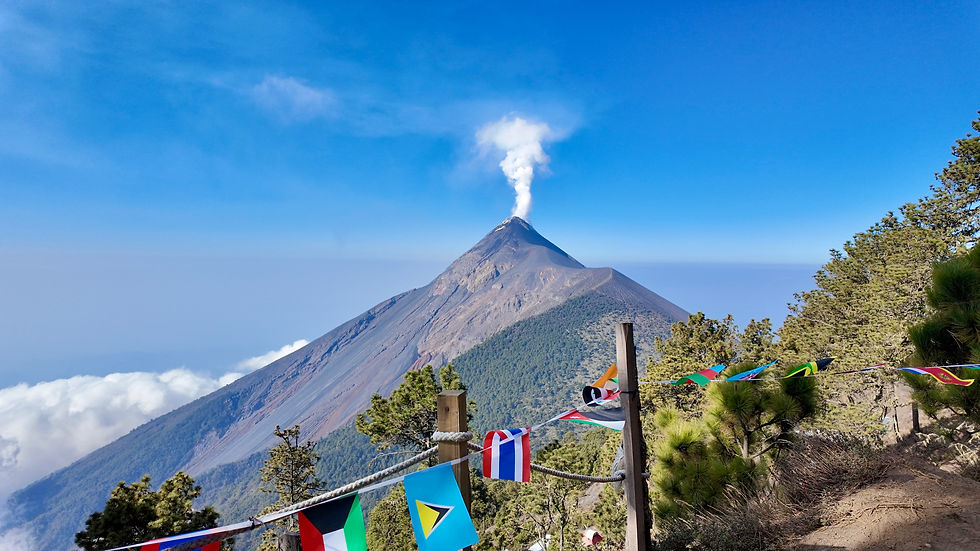
This is a defining experience in Antigua, and you have two options: Acatenango or Pacaya. Acatenango is a 13,045-foot dormant volcano — the hike to its summit is overnight, and the point of the overnight is Fuego. From base camp and the summit, you have a direct, unobstructed view of Volcán de Fuego erupting in real time. What to know before you book: this hike is genuinely hard. The trail is steep, the terrain is loose volcanic soil, and the cold at camp will surprise you even if Antigua feels mild. Pack warm layers. Reputable operators include Wicho and Charlie's, and OX Expeditions.
Pacaya is the more accessible option and the better option if Acatenango feels like too much. It's a half-day hike to an active volcano about 1.5 hours from Antigua. At 8,373 feet, it's significantly lower than Acatenango, and the hike itself — about 1.6 miles each way — takes roughly 1.5 to 2 hours up. The terrain is steep, and the volcanic soil is loose, so don't underestimate it, but most reasonably fit travelers complete it without issue. At the top, you walk across hardened lava fields, feel geothermal heat rising through the rock, and you toast marshmallows over the volcanic vents, which is exactly as fun as it sounds. On clear days, you can also see Fuego, Acatenango, and Agua from the summit.
Where to Eat in Antigua
Antigua has a great culinary scene, with local comedores, colonial courtyard restaurants, and a surprisingly strong craft beer and cocktail scene. You could eat extremely well for a week without repeating yourself. Here are the spots worth knowing:
Panadería San Antonio is a takeout-only bakery open daily from 5:30 am that serves fresh-baked goods and breakfast sandwiches. It's right off Parque Central next to Café Condesa. Perfect if you want a quick breakfast before heading to the arch.
La Casa de las Mixtas has been serving Antigua's version of a street dog since 1994. A mixta is a corn tortilla filled with a local sausage, guacamole, cabbage, onion, and condiments; Guatemala's take on a hot dog. It's a local spot, open Monday through Friday until 3 pm, and cash only.
El Carbonero is the spot for pupusas: thick, handmade corn tortillas stuffed with cheese, beans, or chicharrón that are a staple across Central America. Simple, cheap, and exactly what you want after a long day of walking around the city.
Rinconcito Antigüeño is a local favorite for hearty, traditional Guatemalan cooking in a homey setting. The portions are generous, the prices are reasonable, and everything tastes as if someone's abuela made it.
La Cuevita de Los Urquizú is one of the most talked-about traditional restaurants in Antigua. Dishes are displayed in clay pots near the entrance so you can see everything before you order. For around $10–$12 USD you get meat, two sides, a tamale, and fresh tortillas. The menu leans heavily toward meat stews, so if you're a vegetarian, be mindful of that. Ask for rooftop terrace seating for amazing views of the city.
Itzam Mayan Cuisine is the most educational dining experience on this list. The restaurant is built around corn, the backbone of Mayan cuisine, with multiple varieties: red, black, yellow, and white, all prepared in traditional ways. There's a five-course experience that includes a history lesson and the chance to make your own tortillas. You can also just go in for the food or buy fresh tortillas to take with you. Highly recommended if cultural immersion through food is your thing.
Casa Escobar Antigua is one of the most beautiful restaurants in the city, with a colonial courtyard and an inviting atmosphere. The steaks are cooked to perfection, and the drink list is solid. Worth it for a special dinner or the night before your Acatenango hike when you want something substantial.
El Tenedor is a reliable mid-range option in the heart of Antigua, known for a mix of Guatemalan and international dishes. Good for a straightforward, well-priced lunch when you're mid-exploration and don't want to think too hard about where to eat.
Mesón Panza Verde is located within one of Antigua's most beautiful boutique hotels, and also an art gallery. The space has candlelit arched corridors, lush courtyards, and a refined menu of international dishes: seared tuna, beef tenderloin, and duck confit, and there's live music on select evenings.
Antigua Brewing Company is Antigua's craft brewery, open daily, and a change of pace from colonial courtyard dining, with good beers and a casual atmosphere.
Street Food Tour — one of the smartest things you can do on your first full day in Antigua is book a food tour before you start exploring independently. A good guide will take you through the market, introduce you to authentic Guatemalan dishes like pepián, kak'ik, and rellenitos, and give you context for the cuisine that makes everything you eat afterward more meaningful. Most tours run 3–4 hours and cost $65–$85 USD.

Where to Stay in Antigua
Antigua is compact enough that location is less about logistics and more about atmosphere. The city is divided into a simple grid radiating out from Parque Central, and nearly everything you'll want to see, eat, and do is within a 10–15 minute walk from anywhere in the historic center. That said, where you situate yourself within the city does shape the experience.
Near Parque Central is the most convenient base as it's steps from the cathedral, the market, the main restaurants, and the arches. It's also the busiest part of the city, which can mean more foot traffic and noise depending on the property.
South of the center tends to be quieter and slightly more residential in feel, while still being walkable to everything. This is where you'll find some of Antigua's most beautiful boutique properties tucked into colonial side streets.
North of the center puts you closer to Arco de Santa Catalina and the bars and restaurants along 5th Avenue Norte, and ideal if nightlife and the speakeasy scene are a priority.
Wherever you stay, prioritize a property with a courtyard, garden, or rooftop terrace. The indoor-outdoor flow and rooftop views of the volcanoes will elevate your experience.
Budget ($20–$50/night): Guesthouses, hostels, and small inns throughout the center. The colonial architecture holds even at this price point — you can find a charming room with a courtyard for very little in Antigua compared to equivalent cities.
Mid-range ($80–$180/night): Boutique colonial hotels with courtyards, garden seating, and more attentive service. You can get the full Antigua architectural experience without the luxury premium.
Luxury ($200–$400/night): Converted manor properties and four-star boutique hotels, some with rooftop terraces, spa access, on-site restaurants, and individually designed rooms.
My recommendation: Pensativo House Hotel
Pensativo House is a 4-star adults-only luxury boutique hotel in the heart of the city, about a 10-minute walk from Arco de Santa Catalina and a straight shot to Parque Central. The property has 26 individually furnished colonial-style rooms with beamed ceilings, antique rugs, wooden floors, and courtyard views. I stayed in a Superior Grand room with a king bed and paid $700 for two nights, and was genuinely happy with my choice.
The staff was incredibly attentive, from helping coordinate my transfer from Guatemala City before I even arrived to everything throughout my stay to helping me navigate the city. The rooftop terrace with panoramic views of Antigua and Volcán de Agua was a major plus for me. The breakfast buffet is included and actually very good. Guests also get access to the spa and gym at their sister property, Porta Antigua, which is worth knowing if that matters to you.
Part Two: Lake Atitlán

Why You Should Visit Lake Atitlán
There's a reason people come to Lake Atitlán for a few days and stay for months. The lake sits within the caldera of an ancient supervolcano that last erupted nearly 85,000 years ago, and the landscape it created is among the most extraordinary in the Americas. Three active volcanoes ring the shoreline: San Pedro, Tolimán, and Atitlán. The water is an impossible shade of blue. The elevation sits around 5,100 feet, which keeps the temperature mild and the air clear in a way that coastal Guatemala is not.
But what makes Atitlán more than a beautiful lake is the eleven Maya communities on its shores, each with its own character and vibe. Panajachel is the most-connected tourist hub. San Marcos is the wellness center. San Pedro is the backpacker town. San Juan is the artisan community. Santiago Atitlán has the strongest Indigenous character on the lake. You can town-hop by lancha (speedboat) and feel a completely new vibe within ten minutes.
How to Get from Antigua to Lake Atitlán
You can coordinate your shuttle with your hotel or Airbnb host, or book it on Viator, but be sure to book it well in advance. Some shuttles only go directly to Panajachel, and you'll need to take a lancha to your specific town. If your shuttle gets closer to your town, you'll likely need to transfer to a tuk-tuk before arriving at your actual hotel.
Getting Around the Lake
Lanchas (speedboats) are the lake's public transit. They run from Panajachel's main dock to every other town, roughly every 15–30 minutes during the day. Fares are 20–40 quetzales (~$3–$5) per trip.
In Lake Atitlan, tuk-tuks are everywhere and cost 10–20 quetzales (~$1.50–$3 USD) for most in-town trips. Negotiate the price before you get in.
Critical: Do not walk between towns on the lake trails — day or night. Use the lanchas and tuk-tuks for all inter-town movement.

What to Do in Lake Atitlán
Town-Hopping by Lancha
The best and most essential activity: get on a boat and go somewhere. You can spend an entire day town-hopping for under $15 total: coffee in San Pedro, textiles in San Juan, lunch in San Marcos, and swimming in Santa Cruz. The view of the lake itself from the water, with the three volcanoes reflected on the surface, is one of the best views in Central America.
Swimming and Kayaking
The lake stays around 70°F year-round. The cleanest water is in San Marcos and Santa Cruz. Kayaks and paddleboards rent for a few dollars an hour in most towns. Paddling at dawn before the afternoon wind picks up is one of the best experiences you can have on the lake.
The Indian Nose Sunrise Hike
The Indian Nose is a ridge above San Juan that resembles a face in profile when viewed from the right angle. The hike is best at sunrise and departs between 4–5 am to reach the top as the sun clears the volcanic caldera. The lake is directly below you, all three volcanoes are visible, and on clear mornings, you can see to the Pacific lowlands.
It is highly recommended to go with a guide, as the paths cross private farmland, and independent travelers may encounter on-the-spot fees from landowners. A guided tour on Viator costs only $40 and eliminates the friction.
San Juan's Textile Cooperatives and Chocolate Tour
San Juan's women's weaving cooperatives offer tours of the full textile process, from natural dye to finished fabric. The chocolate cooperative does the same for locally grown cacao. Both are worth your time: being in someone's workshop rather than a market stall changes what buying a textile or a chocolate bar means entirely.
Casa Flor Ixcaco is one of the most respected weaving cooperatives in San Juan. It is a women-led collective where you can watch traditional backstrap loom weaving in process and buy directly from the artisans. The textiles here are made using natural dyes sourced from plants grown in the surrounding area. The detail and craft are extraordinary. Xocolatl is a popular chocolate factory that offers cacao tours and workshops that walk you through the entire chocolate-making process.
Reserva Natural Atitlán
In Panajachel, Reserva Natural Atitlán is a former coffee plantation that has been transformed into a lush nature reserve, and its 100% worth the visit if you're a nature lover. The reserve has walking trails through the jungle, a suspension bridge with views of a waterfall, and a butterfly vivarium. It sounds like a minor attraction, but it turns out to be one of the most peaceful experiences on the lake.
La Calle de Las Sombrillas
In San Juan, La Calle de Las Sombrillas (the Street of Umbrellas) is a narrow pedestrian lane with hundreds of colorful umbrellas creating a canopy above the walkway. It's one of the most photographed spots on the lake, and the overhead shot, looking straight up through the layers of color with the light filtering through, is genuinely stunning.
Xunah Kaab Honey Farm
In San Juan La Laguna, Xunah Kaab is a small family-run honey farm offering tours of their native stingless bee operation. The farm produces several varieties of honey from their on-site hives, and the tour walks you through the full process from hive to jar.
Yoga and Wellness at Eagle's Nest Atitlán
San Marcos is the wellness capital of the lake, and Eagle's Nest is its most well-known gathering point. Perched above the town with a panoramic view of the lake and volcanoes, the open-air platform where classes are held makes even a beginner session feel like something else entirely. Beyond yoga, the programming includes breathwork, sound healing, acro yoga, aerial arts, dance, and traditional Mayan fire ceremonies. The sauna and cold plunge are available for day visitors too.
Where to Eat in Lake Atitlán
The lake doesn't have one centralized food scene; it has eleven towns, each with its own version of one. What you eat and where you eat it depends almost entirely on which town you're based in, so rather than a restaurant list, here's what to know about the food landscape and what to order wherever you end up.
The towns each have a distinct culinary personality. Panajachel has the widest variety, with local Guatemalan spots, international restaurants, and everything in between. San Pedro leans toward budget-friendly cafés and traveler-facing food. San Marcos has the strongest organic and vegetarian scene on the lake, with several plant-forward restaurants and smoothie spots that reflect the town's wellness culture. San Juan is where you'll find the most locally-rooted food with family-run spots serving traditional highland dishes at honest prices.
Wherever you go, here's what you should try:
Fresh lake fish: mojarra (black bass) and tilapia pulled directly from the lake, typically grilled with lime and chili.
Kak'ik is a Mayan turkey soup that is dark from toasted chilis, served with tamales and rice. It appears on local menus throughout the highlands and is worth seeking out at a traditional spot rather than a tourist-facing restaurant.
Tapado is a coconut-milk fish stew that crosses Guatemala's coastal and highland influences. Less common than kak'ik but worth ordering if you see it on a menu.
The coffee is exceptional. San Juan and San Marcos both have cooperatives growing and roasting their own beans at altitude, so if you're a coffee snob, seek those out over the generic drip that shows up at tourist spots.
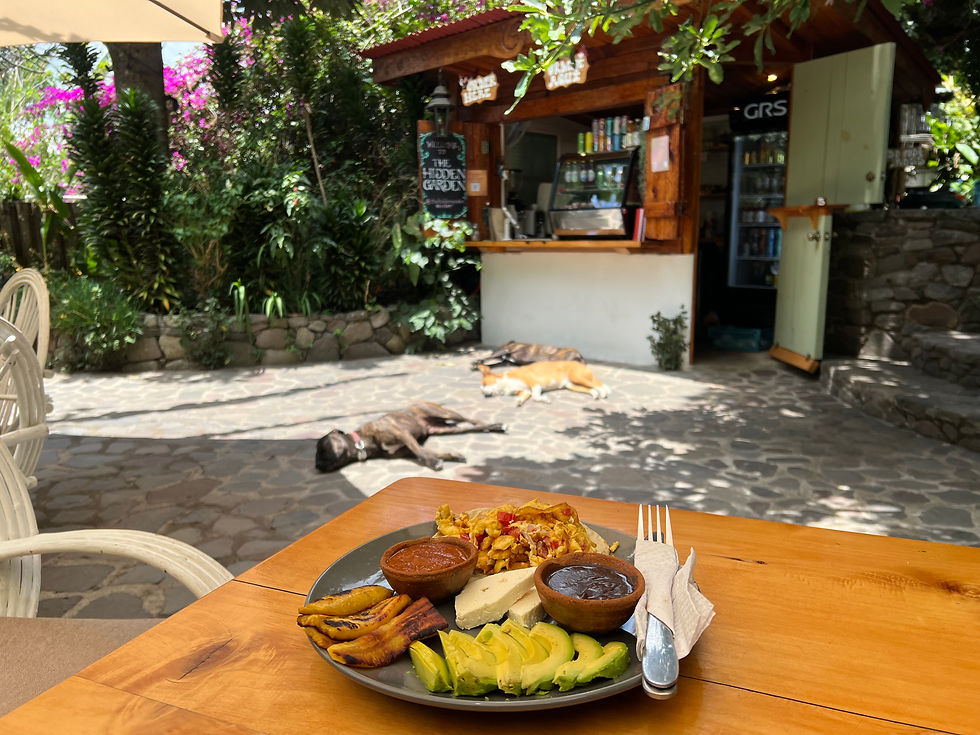
If you're based in San Marcos, the Hidden Garden Atitlán in San Marcos is worth a visit or two. It's an open-air breakfast spot with great food, a relaxed pace, and cats and dogs wandering through.

Where to Stay in Lake Atitlán
Where to stay at Lake Atitlán is one of the most consequential decisions you'll make for this trip. Not because the options are bad, but because each town delivers a genuinely different experience. Unlike Antigua, where location is mostly about convenience within a walkable city, here your town choice shapes your entire vibe.
Panajachel is the most practical base. It has the best transport connections, the widest range of restaurants, and the easiest access to lanchas heading anywhere on the lake. It's the busiest and loudest of the main towns, which makes it a good landing spot for your first night, but not necessarily where you want to spend the whole trip.
San Marcos La Laguna is the spiritual and wellness center of the lake. There are yoga studios, organic restaurants, a nature reserve, and a quieter, more intentional pace than anywhere else on the water. It's the most beautiful town to base yourself in if relaxing and unwinding is the point. Worth knowing: the winding pathways into San Marcos are not well marked, and Google Maps will not fully save you. Make sure your accommodation sends someone to meet you at the dock or gives you very specific directions.
San Pedro La Laguna is the social hub with several Spanish schools, hostels, cafés, nightlife, and it's the easiest town to meet other travelers in. The right base if you're solo and want community energy.
San Juan La Laguna is the artisan town. There are murals on every surface, weaving cooperatives, chocolate, and a quieter, more local feel than San Pedro. This is a perfect option if you want cultural immersion without the backpacker scene.
Regardless of which town you choose, prioritize a property with a lake view from your room or terrace. Early morning stillness with the volcanoes reflected in the lake is the defining Atitlán experience. Also, look for lake access, not just lake views. You're going to want a property where you can walk directly to the water.
Budget ($15–$50/night): San Pedro has the strongest hostel and budget guesthouse scene. Panajachel also has a wide range of affordable options with good transport access.
Mid-range ($50–$120/night): Small boutique hotels and guesthouses in San Juan and Panajachel, often with lake views and more personalized service. A solid sweet spot for the lake.
Luxury ($120–$350/night): Hillside eco-lodges, wellness retreats, and boutique properties in San Marcos and Santa Cruz, which are typically adults-only, nature-integrated, and designed around the view.
My recommendation: Kula Maya Boutique Hotel & Spa
Kula Maya is a boutique lifestyle hotel in San Marcos La Laguna, and it was exactly the right choice for what I needed after doing the Acatenango hike. The property sits steps from the San Marcos nature reserve and the dock, with an infinity pool gazing directly out at the lake and the volcanoes, one of the most striking hotel views I've encountered anywhere. The design is nature-inspired and thoughtfully done: suites, dome rooms, and standard rooms all decorated with local art, each with balconies or terraces facing the lake.
I stayed in the Master Suite for three nights and paid $1,460. After an overnight volcano hike, it was exactly what I needed. The food and cocktails at the tiki bar are worth your time, and the staff throughout was warm, helpful, and genuinely attentive.
One practical note: the pathways to Kula Maya from the dock are winding and not easy to navigate on your own, especially with luggage. The hotel sent someone to help me find my way, which I was extremely grateful for. Confirm your arrival time in advance so they can meet you.
Part Three: Final Thoughts
Is Guatemala Worth It?
Emphatically yes. Between Antigua and Lake Atitlán, you get colonial architecture, world-class coffee, an overnight volcano hike, one of the most biodiverse lake ecosystems in the Americas, and active Mayan culture that isn't performative just for tourists. All within three hours of each other.
This trip is perfect for you if:
You want a destination with genuine cultural depth and visual drama
You're doing the Acatenango hike (worth the entire trip on its own)
You're a solo traveler looking for somewhere safe, interesting, and endlessly walkable
It might not be right if:
You want beach and coastal energy (Guatemala has a Pacific coast, but it's not the highlight)
You need to stay completely connected. Some lake towns have spotty wifi
Guatemala earns all the praise people share about visiting. Give it the time it deserves and do both destinations.
Written after 6 nights in Guatemala: 3 in Antigua, 3 in Lake Atitlán. All opinions are honest and unsponsored. 📌 Save this guide for later — pin one of the images below.



Comments